Monday, June 8, 2015

"To Live"

This is my final paper in the Great Novels on Film course that I took in the Winter/Spring of 2015.  I discuss that while Linda Costanzo Cahir applies Akira Kurosawa'a film Ikiru directly to one of her points in a rubric of what makes a successful book to film translation, she fails to identify that it also applies to another one of her points in her rubric. I have included a video that contains a portion of the film. The sequence that I look at begins around the 43 minute mark and ends about the 57th minute.


In Linda Costanzo Cahir’s book Literature Into Film: theory and Practical Approaches she outlines a four point rubric for the evaluation of a successful book to film translation.  The third point of the rubric states " The film must demonstrate an audacity to create a work that stands as a world apart, that exploits the literature in such a way that a self-reliant, but related, aesthetic offspring is born." In her explanation of this point in her rubric she specifically discusses Akira Kurosawa’s film Ikiru because of its radical translation of Leo Tolstoy’s The Death of Ivan Ilych.  Her main point is that even though Ikiru is so different from the novel it still maintains the core themes but in a much different way.  She discusses how the similarities and differences between the two and even how those differences connect with the novel while creating an independent piece of work. But what she fails to mention is what Kurosawa specifically does to bring about this collaboration of similarities and differences.  I believe that it is important to point out that the second point in her rubric, “The film must exhibit a collaboration of filmmaking skills”, is paramount in creating this new offspring from the novel.  Especially when you see how different Ivan Ilych and Kanji Watanabe search for their personal meaning in life. 


In the novel, Ivan Ilych pursues his search for personal meaning in life through a passive approach of internal thought and self reflection. His revelation of a wasted life is not achieved until the very end of the novel while he is very close to death. His revelation comes too late for him to do anything concretely significant to remedy it. In the end, his passive approach does lead to an ambiguous level of peace, but only as death overtakes him. In Ikiru, Kanji Watanabe initially takes a passive approach by wallowing in a depressive state in a bar drinking his sorrows away.  Similarly to Ilych, Watanabe comes to the realization that his life has been wasted.  Fortunately for him, he makes this discovery early on in his journey towards death and is able to pursue his personal meaning of life in a more actively aggressive way.  His first attempt is by spending a night on the town with a young Novelist who wants to help him discover a new life. 
Akira Kurosawa utilizes his masterful collaborative filmmaking skills to illustrate how this new way of life was not the right one for Watanabe. The scene begins with an extreme closeup of a gaming machine. The light exuberant sounds emanating from it contrasts with the depressive dark mood of Watanabe. The next shot is a tight medium close up of Watanabe and the Novelist, the tightness of the shot portraying Watanabe’s isolation in his new environment. The Novelist explains the meaning of the gaming machine to Watanabe’s situation in life by saying, “Listen, these silver balls, they’re you. They’re your life itself. This machine liberates people who strangle themselves in their daily lives.  A vending machine of dreams and infatuations.” These words are interesting because they describe Watanabe so well in that moment, he is searching for a way out of his rigid life that has been strangling him without him even knowing.  He craves a new life dream, an infatuation to give his life new meaning.  Also, it is no coincidence that the Novelist then pours money into his hands and gestures towards the machine.  It leads to a question, are money and games a new avenue of life that Watanabe wants to pursue?  The camera then dollys back and to the left as Watanabe and the Novelist move towards the machine.  The new camera angle makes the mise en scene more significant.  A viewer can now see that there are other people in the background at other machines. Also, a new man comes into frame, using the machine next to Watanabe; his machine is making the same happy noise as others. Watanabe looks over at this man and wants to experience what he is experiencing.  He proceeds to then insert money in his machine with a smile of hope that he is finding some new joy in his life. The next shot is the same as the opening shot of the scene except we now see the machine operating from an over the shoulder camera angle of Watanabe and the Novelist. The difference is that now it is not an extreme close up but a wider shot that shows Watanabe in the frame, signifying that he has now begun to immerse himself in this new life.


The next two scenes in the sequence are connected because they both show that Watanabe has entered a different world than he is used to. The first scene is very short but shows a lot visually. It is a wide angle camera shot of Watanabe and the Novelist sitting at a table drinking, but they are along a large mirror that reflects the room. The mise en scene shows the room is filled with people talking, drinking, and yelling. Then, unbeknownst to Watanabe a couple of trombones enter the frame and the sound they make frightens him so that he gets up from his seat and looks in surprise terror offscreen in the direction of musicians.  Despite the noisy and crowded room, Watanabe is still able to sit alone with his new friend and have a drink and share a conversation.  He seems to be having a nice time, but Kurosawa uses the loud protruding noise of the band to eviscerate any comfort.  The look on his face is that of a frightened man who is not prepared for the unpredictability that this nightlife has.  The next scene begins with a tracking shot panning from left to right of Watanabe and the Novelist as they are making their way through crowds of people. As they are walking, they are being constantly bumped by people into fences and store fronts creating a hostile environment that culminates in a woman stealing Watanabe’s hate.  Upon the theft of his hat, Watanabe wants to chase the woman and retrieve it, but is stopped by the Novelist and then pushed by a woman in to what looks like a fence made of chicken wire. The shot is a close up of the two men who are now pressed up against the fence which takes up the whole frame, signifying that even in this new life Watanabe is trapped, That point is further emphasized in the next shot when they move from their previous location to stand in front of a store window that gives the appearance of them being trapped behind bars.  The shot is an even tighter close up than the previous one, perhaps signifying an even further confinement.

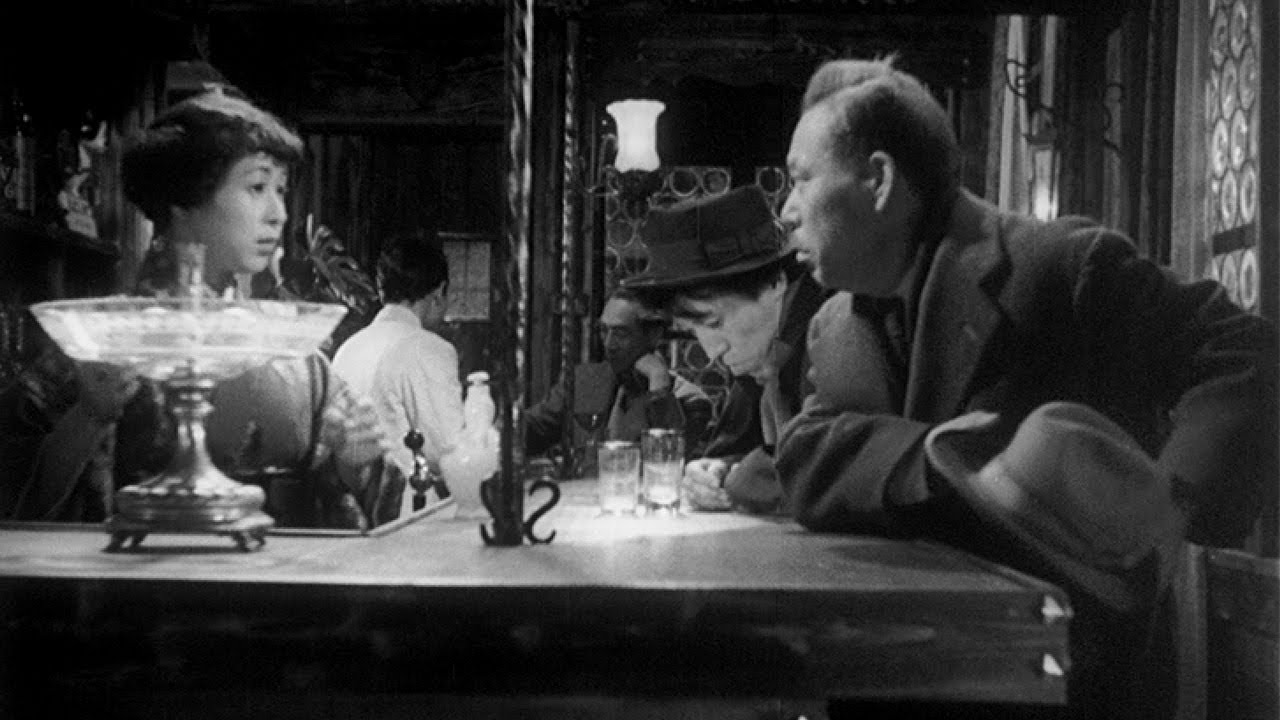
The next four moments within the sequence are all connected because this is when Watanabe gets his new hat that is supposed to symbolize his beginning a new life.  After the wipe scene transition, there is a camera pan from right to left as Watanabe and the Novelist leave a store, cross a street, stop while the Novelist inspects the new hat, and then continues to pan as they enter a bar.  The camera is perfectly situated where Kurosawa can get all the shots he needs without having to movie the camera or edit. They sit down and order a drink from the woman behind the bar and everything is fine until Watanabe removes his hat and the woman goes to put it away.  After having his previous hat stolen he forcefully grabs it from the woman and holds it close. The awkwardness of the situation leads he novelist to laugh because he understands Watanabe’s actions.  In context the situation is ironically funny, but it also shows that Watanabe is trying to adapt to his new life. He has already seen his hat stolen once and does not want that to see that happen again. But, what he does not understand is being able to recognize the difference in the situations.  The new life he is trying to live is very confusing for him because nothing is black and white, it is s mixture of good and bad. One moment someone is smiling and pouring you a drink and then another person smiles and steals your hat.


The next scene within the montage that depicts a collaboration of filmmaking skills is when they venture into a piano bar.  The scene begins with a close up of a piano playing fast paced exuberant music. Then the camera pulls back to show a woman pouring alcohol into the musicians mouth as he plays.  The camera then tilts upward to reveal a mirror on the ceiling that reflects what is happening below. Then there is a cut to Watanabe as he is following a dancing woman throughout the dance floor. The camera follows him as he pursues this woman, but she is always slightly out of reach. These shots of a fatigued Watanabe, accompanied with the loud festive music and camera movement show that this life is not for him.  He literally can not keep up the pace of it like everyone else can.  I believe this point becomes more apparent to him when a moment later he is sitting almost half asleep in a chair and requests the song Life is Brief.  As the musician begins playing the song, a group of young people begin to slow dance; they are shot through a beaded doorway, yet another shot signifying confinement.  But this shot begs the question are these people also confined in their world as Watanabe is to his? As he begins to sing this melancholic song the camera focuses solely on him, but then it moves so that the misc en scene shows the reaction of the people around him.  They are are transfixed on this elderly man singing this melancholic song. Then the camera cuts to the woman moving back towards the musician and then to the piano, mimicking the first shot of scene but only in reverse. The song is the opposite of the opening song, the emotion of the people in the room is also contrasting. In this moment the new life that Watanabe has ventured in and his old one come crashing together.  He has now realized that he can not escape his old life by venturing so aggressively into this new one.  He will not find his personal meaning of life this way.

That point is further emphasized in the last scene in the sequence when he is sitting in this taxi with two women that he and the Novelist have just been dancing with.  There is a close up of him sitting between these two women, and he looks like he is about to be sick.  The camera pans to the woman on his left, who is fixing her makeup, and then cuts to a shot of the woman on his right counting money with him situated on her left. He then tells the taxi driver to stop because he is going to vomit.  What the shots show is that in this new life is a shallow, hollow, meaningless existence filled with fake people and he is surrounded by it.  Surrounded by all this meaninglessness, his mind and his body is rejecting it, forcing him to vomit in an alley. Of course, the vomit literally is a result of his stomach Cancer, but the night’s lifestyle has taken a toll on his body.  There is beautiful close up of his face as he emerges from the alley, his face is half hidden in darkness but his new hat is shining because of the street lights.  He looks melancholic but then gives a little smile to the Novelist.  The camera then cuts to a reaction shot of the novelist with this concerned look on his face, then back to Watanabe, then back to the Novelist. No words are spoken it is just the look that says it all, Watanabe is done pursuing some meaning this avenue of life, he will not find it here.

Ikiru is an audacious work that is independent of its literary counterpart, but it does so because of Akira Kurosawa’s brilliant ability to utilize his collaborative filmmaking skills.  The film and the novels protagonists are in search for their own personal meaning of life.   Ivan Ilych finds it only at the last moment before his death. Meanwhile, Kanji Watanabe will pursue a more aggressive path of trial and error.  His pursuance of his meaning in life initially fails when he tries to go live his life in a drastically different way.  It will not be until he meets a young woman named Toyo that he will find that there is one last thing he can do to salvage his life and that is to get a local park built for the community.  I believe the main point of both works is to pursue some meaning in life regardless of whether its through passive or aggressive ways.  Which path you take is dependent on what type of person you are.

Friday, May 15, 2015

"Boo Radley Revealed"

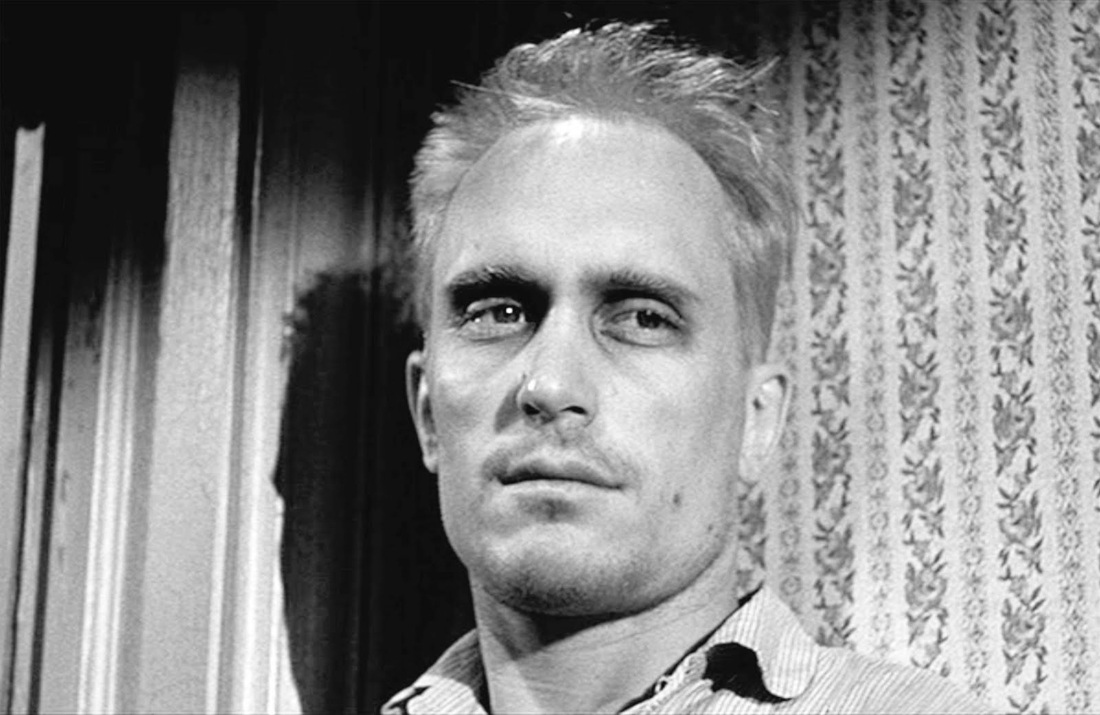
This is a paper I wrote in a Great Novels in Film Course I took in the Winter/Spring of 2015.  It si a sequence for the film To Kill a Mockingbird starring Gregory Peck. The sequence I chose to analyze was the reveal of Boo Radley towards the end of the film. portrayed by Robert Duvall. I have included a clip from Youtube of nearly the entire sequence.


Permeating the novel To Kill a Mockingbird and its film adaptation is the mysterious character of Boo Radley.  Even as readers and viewers of the film, we are enveloped in the mysterious identity of Boo. It is not until the end of both the book and film that he is revealed.  In the book the characters are in Jem’s bedroom, when Heck Tate has just revealed that he found Bob Ewell’s dead body at the site where Jem and Scout were attacked while walking home from the Halloween pageant. Atticus, Aunt Alexandria, Heck Tate and even Scout are surprised at this revelation. Heck Tate asks Scout to recall what happened until she remembers someone rescuing her from Mr. Ewell’s attack and points directly at Boo in the corner of the room.  This scene is significant because it is the first time we see the mysterious Boo.  All we have heard about is the imaginative children’s stories of a wild, malevolent monstrous creature. But, in actuality he is a gentle, misunderstood hero who saves two young children from a true evil monster in Bob Ewell.  The scene in the film, although slightly different, still portrays themes of innocence and loss of innocence, as well as representing the goodness that lies within humanity despite the evil in the world.


The sequence begins with a medium close up of Sheriff Heck Tate asking scout what happened? Then the camera cuts to a mid shot of Scout standing next to Jem’s bed as she begins to tell what happened.  While she is talking there is a cut to a medium close up of Atticus with a concerned look on his face, he can not believe someone would attack children. As Atticus looks off screen, there is a cut to a full frame shot of Jem lying in bed sleeping. His taking up the whole frame prominently portrays the innocence of a sleeping child.  Then there is a cut back to a mid shot of Scout, further discussing the events, then a cut back to a medium close up of Heck Tate who is listening intently. This shot is followed by a cut back to a mid shot of Scout, but just before the next cut, she moves from center frame to the right of the frame, then cut to a medium close up of Atticus, also listening intently. The next shot is a mid shot, but she has now moved to the end of the bed and has her armed wrapped around the tall post. She says, “I saw someone carrying Jem,” which prompts a reaction shot to a medium close up shot of Heck Tate who asks who it was? This leads to a reaction shot of Scout’s response which is to mention the figure off camera.  There is now a cut to a deep focus wide shot of all the characters within the frame. Atticus is standing on the far right of the screen, Heck Tate is in the middle, his figure slightly obscured by the bed post and his body is turning toward the figure. Scout is slightly in the foreground because she is behind the bed post and her back is turned to the audience.  In the far left of the screen, farther in the background and hidden behind an open door with darkness hiding his face and most of his body, is Boo.  This shot is specifically lit in such a way that it hits each character differently, going from lighter to darker as one’s eyes move from the right to left across the frame.  It is not coincidental that Boo is obscured by darkness because of the mysterious nature of his character throughout the film.  Heck Tate moves towards the door and as he grabs it to move it there is a cut to medium close up of Boo, who, now free from the comfortable darkness, makes a slight dash to the wall with a frightened look on his face.  Then there is a cut to a deep focus medium close up of Heck Tate in the foreground and Atticus in the background. Then there is a close up of Scout with an inquisitive look on her face while the camera zooms onto her face. Then there is a cut to  a medium close up shot of Boo that zooms into a tight close up on his face which has an innocent blank look on his face. Then a reverse shot back to close up of Scout’s who begins to understand who she is looking at and begins to smile at the revelation, then a cut back to a close up of Boo’s face which seems be more relaxed now, then a cut back to a close up of Scout’s who smiles and says, “Hey Boo”. Then a cut back to a close up shot of Boo, while the orchestral score swells upon his reveal, with almost an acknowledging smile on his face.  Atticus’s voice cuts into the shot introducing Arthur Radley, which then cuts to a medium close up of Heck Tate in the foreground and Atticus in the background.  Then there is a quick cut back to a close up of Scout’s face with a surprised look on it. Then a cut to a close up of Boo’s face which is used to further emphasize what she is seeing, then a cut back to the close up of her surprised face as she blinks in disbelief at who she is looking at.  Then there is a cut to a deep focus wide shot of Atticus on the far right of the the frame, Heck Tate in the middle of the frame standing in the doorway, with Scout in the middle of the frame still standing behind the bed post with her back turned toward us.  Heck Tate leaves the room along with Atticus after him. 


The moment of Boo’s reveal in the film is relatively close to what is described in the novel, with only certain details differing between the two. His appearance is different than the physically gaunt and pale man he is described as in the book.  Also, Scout’s emotional reaction is different.  In the book she tears up and walks away towards Jem’s bed. In the film, she smiles with excitement upon identifying him.  Despite these minor changes, the film still succeeds in portraying Boo in an impactful way, perhaps even more impactful than the book.  The visual and audio power of film can sometimes surpass what is in the text of the novel.  For example, the way the musical score swells and the camera cuts back and forth to a smiling Scout as she audibly identifies him for the first time creates a magical movie moment.  It is such an iconic first image of a silent, gentle, scared, individual who is a hero.  Atticus is considered the hero of the story because he stands up to racism in the deep south in defending Tom Robinson, but Boo stands up to his own enemies within himself. The scene shows how the years of isolation have taken a toll on him.  You can see his introverted demeanor affect his ability to interact with others as he stands in the corner of the room afraid.  There is also a child like innocence to him.  When he looks offscreen towards Scout, there is an innocence within his eyes that connects him to the children.  But yet, within those innocent eyes you can see how much he has been robbed of his life due to being hidden away.  Contrast his eyes with Scout’s eyes, where you can see a similar innocence, but what is also there is a spark of life and youthful promise of hopeful future.  Those traits are preserved because of the heroic actions of Boo.   

Friday, March 27, 2015

"It Has Become Quiet on the Western Front"

This was a Film Review I wrote in the Winter of 2015 for a Great Novels in Film course I took.  I had to pretend that I was watching the film in the year 2030 for its 100th Anniversary and write a review.


This year marks the 100th Anniversary of the release of All Quiet on the Western Front directed by Lewis Milestone.  Winner of two Oscars at the third Academy Awards ceremony for Best Picture and Best Director, it is the first film to accomplish such a feat.  To celebrate the centennial occasion, Universal Pictures has decided to have several special screenings of beautiful film prints in select theaters.  While there are several screenings around the country, I was fortunate enough to be invited by Universal to attend one these special screenings directly on their studio lot in Burbank, California.  Not often as a cinephile in today’s world are you able to see a beautifully restored 35mm print of a film that is a century old. Especially one with such significance as this.
The film is an adaptation of the novel All Quiet on the Western Front written by Erich Maria Remarque and published in 1929.  The film, like the book, follows the story of Paul Baumer and his fellow German soldiers in WWI.  Paul is the protagonist so the film’s events revolve around his perspective.  He and his fellow comrades begin the film as wide eyed school boys being coaxed into recruitment by their overzealous professor.  He and his classmates then go on to experience the horrors of war, not only the grueling physicality of trench warfare, but also psychological trauma of seeing your friends die.  The film depicts war in an inglorious way to show how the true victims of war are its soldiers.  If they are fortunate enough to live through the war, their experiences change everything about their character. 
While viewing old films, I find it necessary to put them within the proper context when judging their technical merit. The older a film, the more important that frame of mind is.  I find All Quiet on the Western Front to be a technical achievement considering the time in which it was made, specifically the battle sequences.  The camera work during the battle sequences is extraordinary because of how well the cinematographer, director, and editor are able to utilize camera placement and movement. At the beginning of the first battle sequence the camera is used to build suspense. The sequence begins with a dolly shot along the line of German soldiers in a trench, then a cut to a distance shot across the empty battle field, then back to the soldiers, then to more soldiers, then to quick cuts back and forth of bombs dropping, then to soldiers, and then this glorious crane shot of the enemy soldiers advancing. Then the battle begins and we as viewers are treated to a visual feast.  The editing is so fast that as a viewer you can not even blink or else you will miss a shot.  Bombs are dropping, bullets are flying, soldiers are dying at a frenetic pace comparable to modern action films. But what is being depicted at this fast pace is the chaos of war, how quickly and how easily life can end.  If we slow down and take a breath, I believe the Director is trying to ask the question, what is the purpose of this death and violence? All we can really answer as viewers is probably the same as Paul and his comrades: it’s either kill or be killed. 
Another technical achievement that I find impressive about the film is the sound.  The film originally came out in the early years of talkie cinema. The Silent Era was not quite dead yet  in the early 1930s, but the wave of the future was the talkie.  It was painstakingly difficult just to properly incorporate dialogue into a film let alone the elaborate sound effects that were used in All Quiet on the Western Front.  During the action sequence previously mentioned, the sound plays a crucial role in tandem with the camera work to create the warfare atmosphere.  The sound effects of the bombs, bullet fire, and men screaming, are layered in a manner that must have been technically difficult to achieve.  What it accomplishes is reinforcing the visual chaos of war with the auditory chaos of war.  As viewers we are placed into the fray of battle because we both see and hear what the protagonist does.  So we are able to better understand the toll that the war is taking on his person.
The acting is also significant in the film because at the time a big studio would use a big star to sell their film to an audience, especially a film this big and expensive.  But, in this case the main protagonist, Paul Baumer, is portrayed by Lew Ayres, an unknown and essentially unproven actor at the time. Despite his relative newness to film acting, he gives an exceptional performance.  There is a particular brief moment in a hospital where he is being wheeled away and he begins to scream frantically about not dying. It’s slightly theatrical, but I feel that works for the scene because when someone expresses great fear, they are not in control of their emotions. Another scene where he is next to a dying soldier and frantically pleads for him to die is similar in that it shows the psychological effect that his experiences are having on him.  He no longer has the ability to process clearly what the war is doing to him; the only reaction is uncontrolled, incessant babbling. It’s is almost as if his brain can no longer function on a normal level.  His ability to process thoughts in a coherent manner is lost because of all the trauma he is going through.  A main message to be taken from this scene is that the chaos of war has destroyed a once young, fertile mind.
As with many book to screen adaptations throughout the history of film certain artistic license was taken when translating All Quiet on the Western Front to screen.  A most notable omission from the book is the internal monologue of Paul. This monologue was filled with beautiful poetic and philosophical language to depict his tattered thoughts.  Although it works extremely well in the book, it would have been difficult to use in the film. A heavy use of internal monologue narration would have perhaps alienated the audience at the time. But, there are several instances within the film where Paul’s internal monologue is externalized effectively. One such instance is when Paul is addressing a group of young school boys who are expecting to hear great tales of the glory of battle and how honorable it is to fight for their country.  Instead, Paul externalizes his pain and anguish about the war in a powerful speech.  He sees the same same wide eyed Naiveté that was in the faces of his fellow schoolmates and can not stand that the same lies are being told to them.  These lies have doomed his generation to death and despair and he feels they need to hear the harsh truth.  His anti-war sentiment receives harsh backlash from the young minds who have been fed nothing but propaganda about the war.  The scene is important because it shows the contrast between the reality and fantasy of war.  It also emphasizes a theme of stolen youth that appears throughout the film.  Paul and his fellow schoolmates youthful lives were stolen by not only the war but the war fervor that took over the citizens of Germany prompting them to send their men into war.

The anti-war sentiment that is contained in the heart of the novel is also contained in this scene.  The lasting legacy of the film is its ability to portray the timeless themes like chaotic warfare, corruption and sacrifice of youth, physical and mental toll of warfare, and ultimately an antiwar sentiment.  This film along and the novel should be viewed in tandem because they are both important in their specific media format.  The film should be appreciated for its technical feats as well as its bold storytelling.  Films of its nature have been duplicated several times over the years, but I think we owe it to ourselves as film fans, cinephiles, film buffs, film enthusiasts, or whatever adjective you use to describe your love for movies, to preserve the legacy of this film.  It is our responsibility to keep the legacy of classic film intact.  


Wednesday, January 28, 2015

"Foreign Correspondent"

This was paper I wrote about Alfred Hitchcock's 1940 film "Foreign Correspondent" in an Alfred Hitchcock course I took in the Fall of 2013.  In this paper I discussed how Hitchcock was able to make a pro Allies film within a spy-thriller film.


Hitchcock’s 1940 film “Foreign Correspondent” was nominated for Best Picture at the 13th Annual Academy Awards along with his film “Rebecca”.  The film takes place during the time right before Great Britain is about to declare war on Germany at the outset of WWII.  It contains a pro Allies message, but is told through method of  Hitchcock spy thriller.  It is also used as a message to the countries outside Europe that are neutral, specifically the United States, to rally to the Allies‘ side against the Axis Powers. 
As an American viewer you are aware of the war right from the beginning of the film.  The first scene of the film begin with the head of an American newspaper receiving a message from one of its foreign correspondents in Europe.  The message directly mentions the war in Europe.  He is frustrated with the lack of information that it contained, he decides he wants a reporter to go there and discover information, specifically someone one with an objective perspective.  The viewers’ introduction to the main protagonist shows, John Jones, is that of the everyman. Having John Jones being portrayed as the everyman it gives the viewers someone whom they can relate to. In this case probably an American viewership putting themselves in his shoes of the American protagonist at the outbreak of WWII. 
There are two scenes in the film that I believe are directed towards the viewers of the time to support the Allied cause.  The first is the scene that I find to be the most memorable, it is the scene where Mr. Van Meer is confined to a bed and Mr. Fisher is trying to get him to say what clause twenty-seven is.  But, Van Meer comes to the realization that Fisher is working with the enemy and delivers a powerful monologue saying, “I see now. There's no help. No help for the whole poor suffering world. Oh! You cry peace, Fisher. Peace. And there was no peace. Only war and death. You're... You're a liar, Fisher. A cruel, cruel liar. You can do what you want with me. That's not important. But you'll never conquer them, Fisher. Little people everywhere who give crumbs to birds. Lie to them, drive them, whip them, force them into war. When the beasts like you will devour each other, then the world will belong to the little people.” It seems to be a message to those who think war is avoidable but the reality is that war and death is inevitable. He also says that regardless of what they do to him, they will never conquer them. The ‘Them” I believe he is referring to is the Allied nations.  He describes them as little people who give crumbs to birds, they will be sent into war. The little people he refers to will ultimately live on while the beasts will kill each other off. A powerful message of good vs evil from Van Meer to the viewers. 

The second scene is the very last scene of the the film where Jones is giving a radio message to America while London is being bombed.  He forgoes fleeing to a bomb shelter to deliver a message to the American people saying,  “Keep those lights burning, cover them with steel, ring them with guns, build a canopy of battleships and bombing planes around them. Hello, America, hang on to your lights: they're the only lights left in the world!” It is a message to the United States to get involved in the war.  Hitchcock is using Jones‘ speech as a way to convey Britain’s message for help from the United States by appealing to the film viewers.  At the time the film was made the U.S. was neutral, even though history shows they were sending supplies to Great Britain, they would technically remain neutral until the attack on Pearl harbor in 1941. Coincidentally Hitchcock was working on “Saboteur” during that attack, another anti-nazi film.
While “Foreign Correspondent” can be viewed as a pro Allies propaganda film, it is also contains elements of a Hitchcock spy thriller.  Similar to the thrillers that preceded it and those that would come after it, “Foreign Correspondent’ contains a leading man who starts as an ordinary everyman, who then gets involved in events that are much larger than himself.  Along the way he develops a romantic relationship with a leading woman, in this case Laraine Day portraying Carol Fisher. Their relationship begins as an antagonistic one when Jones dismisses her father’s peace organization because it is made up of well meaning amateurs who can not go up against pro war organization members.  She takes particular offense to his remarks and proceeds to chide him in her speech.  But, I found it interesting that while giving her speech she seemed to become flustered by his notes and the way he gazed at her from the crowd. It seems that his forward romantic advances towards her caught her off guard. 
In typical Hitchcock fashion the main antagonist is someone who is wealthy.  A respectable person in society is someone that would be least expected to be a villainous Nazi spy.  His public persona is a facade for him to be able to mask his malevolent dealings.  Van Meer even calls him out as cruel liar because he talks about peace but in actuality he wants war.  The antagonists in Hitchcock’s thriller films seem to all be powerful wealthy public figures who fool the masses.  Van Meer calls Fisher his friend when in actuality he is his enemy. i also find it interesting in the end Fisher ends up as hero in sacrificing himself to put less weight on the wing they were latching onto.  But I think as a viewer you have to ask was he doing it unselfishly or did he just not want to be caught and humiliated by being put on trial? Hitchcock enjoys creating those questions in the viewers’ mind.


It would not be a Hitchcock thriller without its moments of suspense.  There are several sequences of suspense in the film.  One such sequence is that at the windmill where jones discovers than Van Meer is really alive and his assassination was staged.  As Hitchcock did so well throughout his career he uses the art of editing to create suspense. During the scene it cuts back and forth from the kidnappers tending to a drugged up Van Meer to Jones hiding from them. From time to time Van Meer will look up at a spot Jones is hiding but when the camera moves there Jones is not there.  There is a wonderful birds eye view shot of Jones hanging on the outside of the windmill that gives the viewers a good look at the dangerous position he is in.  
Another scene that contains suspense is the scene atop the Cathedral tower when a bodyguard named Rowley, portrayed by Edmund Gwenn,  hired by Fisher is really a hit man who is suppose to get rid of Jones.  As viewers we know what his intentions are but jones does not.  During the scene the Rowley glances towards the elevator to see if everyone leaves and makes sure to keep Jones occupied near the ledge. When he moves in to push Jones off, the camera angle is that directly facing the viewers as if he was walking right at them and pushing them off the ledge. That was a great sequence where Hitchcock played with the viewers by using a point of view camera shot.  What is also great is that all we see is man’s body fall but we do not know who until the next scene. For a brief moment the viewers could possibly think that Jones is dead. Yet another way Hitchcock plays with the audiences emotions.
I must also comment on the final climactic event of the film and that is the plane crash scene.  i though it was absolutely brilliant how Hitchcock was able to capture the chaos of a plane crash landing in the ocean. What I failed to mention before is that while he uses editing to create suspense he also uses the score very effectively in those scenes.  But in this scene he decides to not use any score but let the sounds of the scene speak for itself.  The only time a score comes in is at the end of the sequence, specifically when it swells up with Fisher sacrificing himself. It is remarkable to look at the entire sequence and realize that it was done on a studio set.  The sound effects, the water, the wind, everything was placed into the scene perfectly to capture the fear of the moment.  There is also a sense  of unpredictability for the viewers. The chaos of the moment can lead to one or perhaps all the characters dying. 
      
For as serious a subject that the film deals with, Hitchcock lightens the mood with humorous dialogue throughout.  Most of the humor comes from secondary characters like Stebbins who sarcastically remarks about his jitters due to alcohol consumption. Or Ffolliott, portrayed by the great George Sanders, who comes up with some of the best humorous lines.  The humorous lines come so quick that they are easy to miss and contain that dry sense of British humor.  For example there is the scene right after Rowley has attempted to kill Jones and Ffolliott is revealed to have an inclination as to what is going on.  His dialogue is so matter of fact, the way he humorously states all the facts he knows including that war will be declared tomorrow weather permitting as if it were a sports game I find funny.

“Foreign Correspondent” successfully blends pro Allied propaganda and Hitchcockian thriller into one film.  Through his artistry as a film maker Hitchcock was able to deliver a propaganda message through one of his films, something he would also do In “Saboteur”.  i think that one of the big questions is was how affective was his propaganda message. As I said earlier that the U.S. would not officially enter WWII until late 1941 and a western front would not be established until D-Day, June 6, 1941. Of course having the U.S. enter the war was a big game changing moment. But I guess one of the questions that are probably pondered by Historians even today is what would have happened if the U.S. entered the war earlier than they did? Would a film like “Foreign Correspondent” even have been made? I for one am happy that it did because we get yet another solid Hitchcock film that can be viewed today and it actually holds up very well.  
   

Saturday, January 17, 2015

The Hitchcockian Legacy

This was an essay I wrote about Alfred Hitchcock's Legacy in a Alfred Hitchcock course I took in the Fall of 2013. I analyzed the first thirty minutes of Brian De Palma's 1973 film "Sisters" and also a piece written by Richard Allen titled "Hitchcock's Legacy".


As long as their are those who love film, Hitchcock’s legacy as a film maker will live on. As long as their are those who want to create their own films, his legacy will also live on.  Occasionally those two types of people are the same person, like myself and countless others of my generation and past generations.  In several interviews I have seen with William Friedkin, director of “The French Connection” and “The Exorcist”, he has numerous times said that he learned the craft not through formal film school but by watching the films of great directors like Hitchcock and implored others to do the same.  His influence has impacted not only American cinema but foreign cinema as well.
In the reading, “Hitchcock’s Legacy” by Richard Allen, he writes that the young french film makers of the 1950s and 1960s were highly influenced by Alfred Hitchcock and revered him as a great Auteur.  Young French film makers like François Truffaut, Claude Chabrol, Eric Rohmer, and Jean-Luc Godard viewed Hitchcock’s films became a model for classical art cinema.  According to Allen, Claude Chabrol explored the shadow world that lurks beneath the veneer of bourgeois values. Like Hitchcock he used the duality of delivering a story on the surface but providing hidden meaning through depth.  For Francois Truffaut, Hitchcock appealed to him because of his cinematic technique.  He was interested in how Hitchcock would frame a scene.  Allen says that Truffaut concentrated on the plot surface and not quite as deep as Chabrol.  He is also responsible for the fantastic interview he did with Hitchcock in the early 1960s.  At first glance Godard seems like the antithesis of Hitchcock because his films seem so disjointed while Hitchcock contains such straight structure.  But, Godard is similar to Hitchcock in the sense that he is on a different level of auteur than Hitchcock but took him as a base.  Allen mentions that Rohmer’s films, while considered Hitchcockian, are cerebral, realist, lack drama, and suspense. So in a way they are the antithesis of Hitchcock.


American film makers, like the foreign ones mentioned above, also were influenced by Hitchcock.  My favorite decade of American film is the 1970s. I view it as a period of American film renaissance.  New young film makers arrived in Hollywood and provided a shot of new energy to American film that was desperately needed.  well known film makers like Martin Scorsese, Steven Spielberg, Francis Ford Coppola, George Lucas, Brian De Palma, William Friedkin, and several others. While they all did not make Hitchockian films they all started out as film fans watching and learning from Hitchcock films.  My favorite living Director is Martin Scorsese and while he is mostly known for his gangster films, his 1991 film “Cape Fear” is his Hitchcockian film.  It is a remake of a 1962 with the same title and even uses the same wonderful Bernard Hermann musical score. He also uses the great Saul Bass to create one of his great title designs, like he did with Hitchcock on Vertigo, North by Northwest, and Psycho.  The character of Max Cady, although from the original film, is presented like a character straight out of a dark Hitchcockian nightmare in his relentless almost demonic presents on screen. He is frightening in the way that Norman Bates was frightening, on the surface a calm demeanor, but you get the feeling underneath lies something grotesque. While we get small glimpse through cracks in Bates‘ psyche in “Psycho”, we are treated to the frightening evil that is Max Cady.
It is interesting that Pat Hitchcock would say that Spielberg is the true heir of Hitchcock.  I must admit that it has only been over the last year that I have been able to look upon Spielberg as a serious film maker.  I used to think that he was too commercially successful and that he panders to a larger audience for financial success. Then I began to learn more about Hitchcock and how he was able to mesh both financial success and artistic film making into one.  Spielberg has been able to do the same throughout his career.  His first big success was “Jaws” a Hitchcockian film in the sense that it used its musical score by John Williams to create tension throughout the film. Also the use of implication throughout the the film was very Hitchcockian.  Throughout the the film you never get a glimpse as to what the shark looks like until the later sequences. All that is shown the viewer is the victims being taken underwater by the shark and their screams. It gets to the point that beach goers in the film are so psychologically afraid of the shark that even a mention of the word could have people running out of the water. It is said that Hitchcock made people afraid to take a shower after “Psycho”, with “Jaws” Spielberg made people afraid to go into the ocean.


Now someone who took the most from Hitchcock is Brian De Palma.  His early films in his filmography especially, like “Sisters”, “Carrie”, “Dressed to Kill”, and “Blow Out” all can be said as having Hitchcockian elements to them.  The first thirty minutes of his 1973 film “Sisters” contains several Hitchcockian elements.  Right from the opening credit sequence there is a Hitchcockian nature to the film with a Bernard Hermann score. The score is not only in the credit sequence but permeate throughout the film.  The first scene features Margot Kidder as blind woman entering a locker room where she begins to undress with an on looker in the room.  De Palma is showing someone who is being a voyeur, like Hitchcock did with Jimmy Stewart in “Rear Window”.  As she is undressing there is a freeze frame in which it is revealed that it is part of a “reality” game show called peeping tom, further displaying the voyeurism theme. De Palma also uses Hitchcockian camera movement in the film.  The scene at the restaurant opens up on a closeup of a statue of a monkey and then pans slightly out then dolly shots over the restaurant to the table where Danielle and Phillip are sitting.  It appears he uses a crane shot in the scene where Danielle and Phillip are lying on the couch kissing each other. The shot starts overhead and then slowly pans down to Danielle’s thigh to reveal a nasty scar, while an ominous Hermann score sends a message to the audience that this is something important. Another Hitchcockian element is the idea that Danielle has split personality between her and her sister Dominique, similar to Norman Bates from Psycho.  Although it is not revealed within the first thirty minutes, I could deduce that based on how heavily the film is relying on Hitchockian elements.  The murder scene seems like an homage to the shower scene in “Psycho”. The murderer even uses a knife similar to the one used in “Psycho” but in this case because it is the 1970s the scene can be much more violent on screen than in “Psycho”.  The obsessive ex-husband reminds me of Jimmy Stewart’s character in “Vertigo” in the way he seems to be infatuated with Danielle.

Tuesday, January 6, 2015

The Perfect Crime

This was an essay I wrote on the third episode of the third season of the television series Alfred Hitchcock Presents titled "The Perfect Crime" starring Vincent Price. I originally wrote this essay in an Alfred Hitchcock course I took in the Fall of 2013. Since I referenced the events of the episode a lot,  I also included a link to the episode from Hulu.com.


A common thread that is spread throughout most of Hitchcock’s directorial filmography is that of death and/or murder.  Spanning six decades, from the 1920s to the 1970s, Alfred Hitchcock made films that featured death as a common theme.  In several of those films death was a result of murder.  The theme of murder would be one of many themes that would become part of his legacy as a film maker.  Along with certain themes, a specific style in which he would make his films would comprise what is known today as Hitchcockian.  His television series, Hitchcock Presents, would also use the Hitchcockian style in its episodes, especially those Directed by Alfred Hitchcock himself.  For example, the season three episode three “The Perfect Crime” , aired on October 20, 1957 was Directed by Alfred Hitchcock.
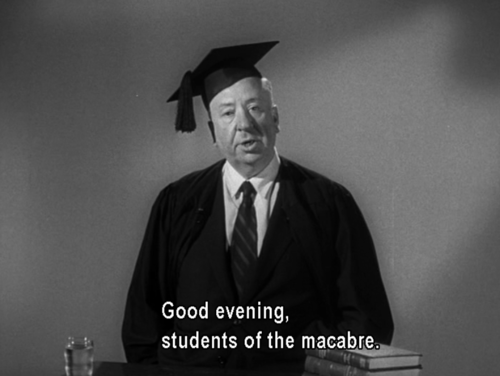
In Nicholas Haeffner’s book on Alfred Hitchcock he mentions how affective he was at selling his persona and his films to an audience.  By the late 1950s Hitchcock was a very popular and well known Director amongst audiences not only on the big screen but also the small screen.  In the television series Hitchcock would appear on screen and talk with the viewers.  This episode, “The Perfect Crime”, starts off in the usual way with the iconic Hitchcock silhouette and accompanying theme music.  The camera pans over to Hitchcock sitting in a chair wearing a hat and smoking a pipe, looking very similar to Sherlock Holmes.  Although he does not mention who he is emulating, he hints at it by saying “Good evening lady and gentlemen and Dr. Watson wherever you are.”  To make a reference to one of the most famous fictional private detectives of all time right before the episode that has a murder mystery storyline in it is a smart tactic by Hitchcock and his writer’s.  Chances are they are most of the viewers are already familiar with Sherlock Holmes, so Hitchcock uses that to his advantage and also adds his own comedic charm to it.  The exorbitant amount of bubbles coming out of the pipe and him frantically swatting to pop them while commenting on the perils of bringing a pipe to bed is a nice light comedic moment before we get into a story about murder.  Something he did throughout his filmography was have the ability to switch from comedy to drama and sometimes mesh the two together.


The episode stars Vincent Price as a very successful detective named Charles Courtney and James Gregory as an unsuccessful defense lawyer named John Gregory. Gregory confronts Courtney about a case involving a murder by a man named Harrington of a man named Ernest West. But, before he brings up such a case they have a very casual conversation about murder.  Specifically, Courtney’s trophy case of mementos from his victorious cases and an empty spot awaiting the perfect crime, or how he puts it the perfect murder.  This casual chatting about murder reminds me of the discussion that Charlie’s father and his friend have in “Shadow of a Doubt” when they were discussing how one would commit murder and get away with it.  Their conversation is more comedic but what the two conversations have in common is the casualness in which such a serious subject is discussed.
Through this casual conversation Courtney seems to exhibit some of the characteristics a of a classic Hitchcock antagonist.  He is a wealthy egotistical individual who seems to have gained a lot of wealth and positive standing in the public’s eye.  He remarks that his trophies represent perfect memories of imperfect crimes.  Although he says that they are not monuments to his brilliance but tombstones to the stupidity of criminals regards, one can not help but think he is merely being modest as to not appear to be egotistical. But, then he goes onto to say that he can not find a real challenge hence why he holds out hope for the perfect crime. He seems bored by all the  trophies, as if they were all the cases were to easy.  His biggest fault and ultimately the biggest fault of any of Hitchcock’s antagonists is their ego. They think they are perfect or at least present themselves in that way.  In this instance the fault in Courtney’s perfection is revealed to the audience in one Hitchcock’s famous plot twists.


About midway through the episode after Courtney has smugly explained how easy it was for him to discover Harrington as the killer of West, Gregory reveals that Harrington was not the killers and he can prove it.  Courtney dramatically rises to his feet, with the camera shot just neck high revealing the look of disbelief on his face. Then there is a great cut to the Hitchcock silhouette as a dramatic score plays.  The silhouette seems like a silent message by Hitchcock to the audience reminding them that it is the Hitchcockian twist that they familiar seeing in his work.  Courtney of course must dismiss his claim as false because in his mind he can never be wrong, especially a case that has already resulted in the execution of the man he found to be the murderer.  But in true Hitchcockian fashion the truth is revealed by Gregory not only to Courtney but to the viewers as well. Not only does Gregory reveal the truth but he has monologue within his revelation that is a direct strike at who Courtney is.  He exclaims that at last those like Courtney will know the taste of defeat and humiliation, brought down to some level of the ordinary. Then I think he makes the grave mistake of trying to hold this truth over Courtney in the form of blackmail.  He literally goes nose to nose with Courtney and his ego and as he says his reputation does not allow mistakes. So Gregory pays the ultimate price for his confrontation in what I perceive as a second Hitchcockian twist.
After their brief heated confrontation, Courtney seems to retreat for another drink off camera. The camera holds on Gregory who turns his back to take what he assumes is a victory drink and then from off screen the arms of Courtney move around his neck, then fade to black.  The quickness by which the arms of death position themselves around the neck of Gregory must have given the viewer a jolting fright.  That quick action is the second Hitchcockian twist in the episode.  The next scene begins with the press taking pictures of Courtney as he shows them around his home. He has the same calm exterior that he had earlier in the episode.  I find the moment when he describes how efficient his oven is that he uses for ceramics to be great. The way he utters the word “efficient” twice and looks down at his wrist indicates that it is significant.  Also the way he describes the vases as being made with a “special” kind of clay.  Hitchcock was a master of using implication in his films.  The oven and the clay pot imply that Gregory was killed and his body was disposed of in the oven. But of course given the time it was made that can not be shown on screen.

Hitchcock arrives at the end of the episode to provide an epilogue.  He enters the room in which the episode took place but all the furniture have sheets placed over them as if no one lives there any longer, implying that Courtney has been caught. He points to the spot that the vase was in and explains that Courtney had been caught when a woman knocked it over and when it broke it revealed pieces of Gregory, like his gold filling. Hitchcock even makes a joke using the Humpty Dumpty nursery rhyme in reference to fragments of Gregory. A flash of his dark humor shows through. Coincidentally the woman who knocked over the case is now a darling of the press like Courtney was.  Hitchcock also ends the episode with another joke that cleaning women all over the world have been trying to knock over vases so they too can become famous.  Leave it to Hitchcock to end an episode that revolved around death and murder with not one but two jokes.   

Saturday, December 27, 2014

"Hip to be Square"

This was a paper I wrote about the character of Patrick Bateman from the film "American Psycho" directed by Mary Harron.  In the paper I tried to make the argument that his character is a warped refection of the value system within his society. 

“I have to return some videotapes” is something Patrick Bateman says when he is confronted with a situation that he needs to escape from.  Returning videotapes was also a common practice for people living in the 80s and 90s, so it is a perfectly logical excuse to get out of any situation. Patrick Bateman is a character who is very much a man of his time.  He has successfully fit into the society in which he lives.  But, Bateman’s value system is a contorted reflection of his society. 
An early scene in the film depicts Bateman’s morning routine.  The music is a repetitious piano music accompanied by a relaxing voice over narration by Bateman. The narration is a way for him to tell the audience about himself, specifically the particular details about his morning routine. Through this scene he depicts how obsessed he is with his physical appearance.  He likes to take care of himself through a balanced diet and rigorous exercise.  It is Interesting that he chooses the word “rigorous”, not just a normal exercise routine, but one that is extraneous because his body is so important to him.  His body is so important to him because he wants to project the best image of himself that he can.  Even the remark about how many stomach crunches he can do, is intended to impress us as the viewer.  Our approval as viewers and the approval of others within his society are important to him.

 
His entire morning routine is done in a ritualized manner. Every chemical he applies to his face and body is done in a particular structured order. The purpose of this ritual is to show that he prefers things to be done in a proper order, as later evidenced in some of the murders he commits.  The briefs shots we see of his apartment during his routine are also indicative of him wanting to keep his life in a particular order.  The apartment is very plain looking with all white furniture. All the appliances in the kitchen are a plain metallic steel. There is no semblance of personality within the place, no particular characteristics that would let a visitor know whose place it was.  I view it as a social commentary on his society how plain and un unique people are within it.  More evidence of that can be found in the next scene I want to look at.  

The next scene I want to address is the “Business Cards” scene.  In the scene we see several of Bateman’s colleagues from the stock broking firm.  There is a particular shot of three of them conversing on one side of the room, while Paul Allen speaks with Bateman. What is noticeable about that shot is that they are all dressed relatively the same way and with the same haircuts. Both Bateman and Paul Allen are dressed the same as well.  What this shows yet again is that Bateman is living in a society lacking in uniqueness.  They are almost interchangeable parts within their society.  Allen even mistakes Bateman for another broker because he wears the same glasses, wears the same suits, and even goes to the same barber.  Of course he must mention that despite that he still has the better haircut.  Yet again the need to look better than anyone else arrises.


I feel the heart of this scene comes when Paul Allen is leaving the room and hands his business card to Justin Theroux’s character Bryce, who mentions that he has a reservation at Dorsia for 8:30 on Friday night.  First when Allen hands the business card to Bryce there is a whoosh sound effect that seems to emphasize its importance.  The same sound effect is used when Bateman immediately whips out his business card almost to counter the action of Allen. Bateman is obsessed with being atop the hierarchy in his male dominated society and he views Allen as a threat to his position.  Dorsia is a place that he and his colleagues can not get a reservation at on a regular day, let alone a prime time like Friday night, so they are jealous of Allen, one even remarks that they think he is lying. But, Bateman views this jealousy as another form of admiration for Allen, which is why he brings out his new business card.  He immediately boasts about the particulars of his card assuming they will be instantly impressed. Then his colleague Van Patten pulls out his card to upstage Bateman, which Bryce acknowledges in a positive way, much to the dismay of Bateman. Then to upstage both cards Bryce must pull out his own card. Bateman must salvage the situation by seeing Allen’s card because he needs to solidify his own male ego by having a better card than Allen. The body language of his colleagues as Allen’s card is produced is telling of just how perfect it is, they too are threatened by Allen but not to the extent Bateman is.  The perfectness of the card is shattering to his ego, making him sweat and shake so much that he can not even hold the card for more than a few seconds.  As this whole scene shows, Bateman and his colleagues are reflective of an egotistical society, the difference is that Bateman needs to do obscene things when his stature in that society is threatened.
The very next scene is the scene where Bateman confronts the homeless man names Al.  I find it interesting that this scene immediately follows the business card scene because it depicts how Bateman acts when his stance in society is threatened and is a commentary on how his society treats the poor.  The only way he can re-establish his place in the societal hierarchy is by showing his superiority over someone weaker than him.  He chooses a homeless person for a couple of reasons, first because he views them as inferior people to himself, making it easy prey for him, and second because they are the exact opposite of what he is. He even goes as far as to flat out say that to Al right before he kills him.  Bateman believes that he can get way with murdering a homeless person because the society in which he lives in does not even recognize them because they are so far beneath them in their societal hierarchy.   But what is interesting about the scene is the manner in which he speaks to Al.  He is standing over the man as he sits in the gutter pleading for help. What this scene shows is not only Bateman’s contempt for the poor but because he is a reflection of his society, it also depicts his society’s contempt as well.


A scene that I feel connects with the three previous scenes that I mentioned is the murder of Paul Allen.  Even though he has killed poor Al after feeling threatened by Allen, the threat still lingers and he must get rid of it permanently.  When Allen is sitting drunk in Bateman’s apartment, Bateman must go through a specific ritual, similar to his morning routine. He begins with berating Allen with an intellectual soliloquy on his views about the popular band Huey Lewis and the News.  This shows that he needs to feel intellectually superior.  What is interesting is that he chooses their song “Hip to Be Square” as their masterpiece.  His choice is not coincidental because it is a song about the pleasure of social conformity and importance to have friends, which is a notion that Bateman is a living embodiment of. He is pretending to be hip while living in a square society. He conforms to social norms because that is what is expected of him.  He is a social commentary about how hollow his society is.  
While he is telling Allen his thoughts on the band, he goes through a series of personal checkpoints.  He has already laid down newspaper and covered his white furniture. He wears a clear poncho like a raincoat to catch the blood splatter.  He values the idea of physical cleanliness, so taking such precaution is normal for him. But it also exhibits the idea that no matter the act that is being committed a proper order and cleanliness is most important.  While he is killing Allen, he yells out “Try getting a reservation at Dorsia Now.”  I believe those words are important because they explain so much about why Bateman is killing Allen. He is killing Allen because of his values of jealousy, male dominance, and a fear of his stance in society.

The value system that Patrick Bateman exhibits throughout the film, although extreme, depicts the value system of society.  But it can also be viewed as a cautionary tale for our society.  If we adopt the same values of the society in which Bateman lives, we are in danger of becoming just like Bateman.  What is frightening about that notion is that Bateman’s values are very human.  The feelings of jealousy, wanting to be physically attractive, wanting to portray a great image, wanting to be wealthy, and as hard as it is to say we all have that feeling of wanting to be better than those around us, are human emotions.  Bateman is just an extreme form of those very human feelings.  As disturbing as this may sound there are already Patrick Bateman’s living among us.  They may not commit the same heinous acts as him, but a similar mindset is there.